

【Food Antioxidants Series 5】 A New Force in Natural Antioxidants | Marigold Flavonoids
Sep. 18, 2026
In the field of natural food antioxidants, flavonoids have attracted growing attention for their strong antioxidant capacity and natural origin. They are emerging as a new antioxidant option in the food industry that combines functionality with environmental benefits, aligning with consumer demand for food additives that are natural, healthy, and sustainable.
Marigold (Tagetes erecta L.) is an annual herbaceous plant of the genus Tagetes in the Asteraceae family. Native to Mexico, it is now cultivated on a large scale in several regions of China, including Xinjiang, Hebei, and Yunnan. Marigold is not only a high-quality raw material for lutein extraction, but its flower residue is also rich in flavonoids. Through further processing and extraction, these flavonoids can be recovered as marigold flavonoids, enabling more comprehensive utilization of the raw material and significantly increasing the added value of the marigold industry.
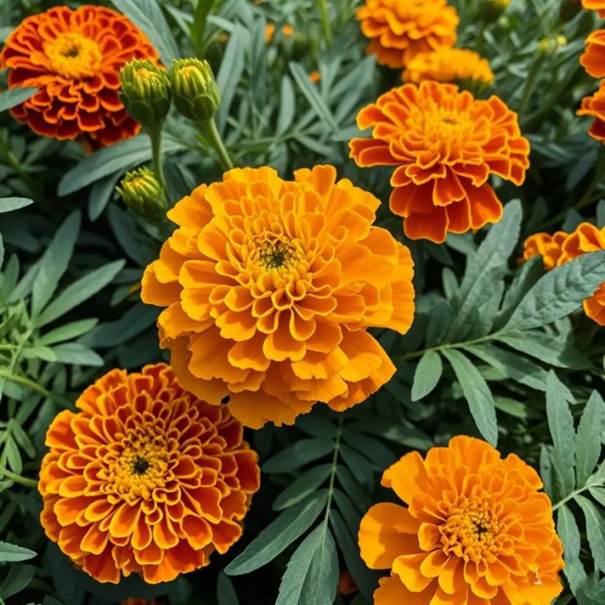
Image Source: Baidu Encyclopedia (Baidu Baike)
I. Marigold Flavonoids
Marigold flavonoids are a natural mixture of flavonoid compounds extracted from marigold plants and processing by-products (flower residues) through processes such as solvent extraction, purification, concentration, and drying. They represent an important achievement in the comprehensive utilization of the marigold industry chain. The principal active component is quercetagetin, which accounts for more than 80% of the total extract. Compared with the commonly occurring quercetin, quercetagetin contains one additional hydroxyl group and exhibits relatively strong antioxidant activity among naturally occurring flavonoids [1].
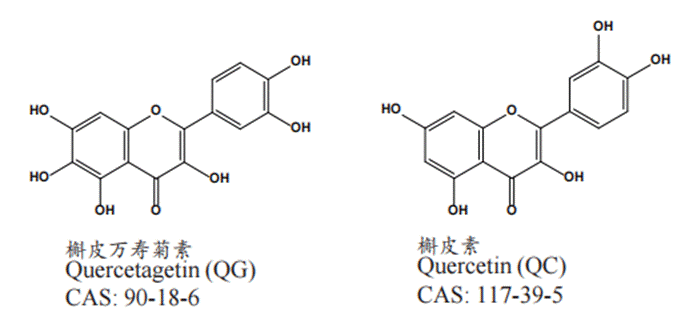
Image Source: Baidu Encyclopedia (Baidu Baike)
Marigold flavonoids are primarily produced from flower residues generated as by-products of marigold processing, enabling the value-added utilization of agricultural waste. The mainstream extraction process is ultrasound-assisted extraction using an aqueous ethanol solution [3,11], combined with macroporous resin purification. Some advanced production processes employ supercritical CO₂ extraction [4] to maximize the retention of active components [2]. Based on their solubility characteristics, marigold flavonoids can be divided into oil-soluble and water-soluble forms, each suited to the processing requirements of different formulation systems.
II. Basic Properties
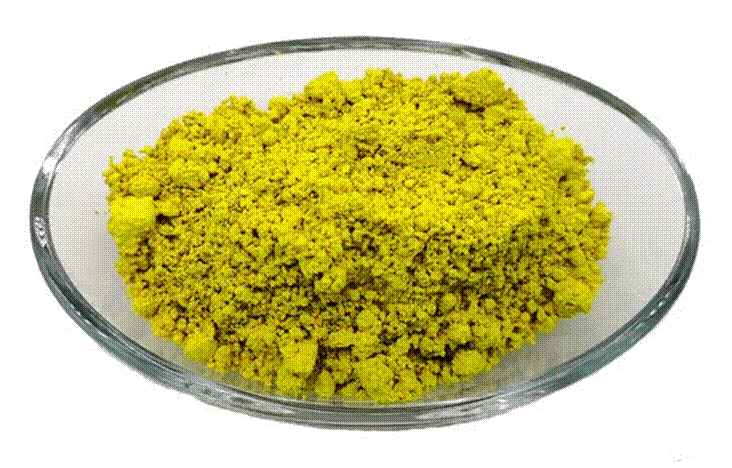
Image Source: Baidu Encyclopedia (Baidu Baike)
-
Physical Properties: The purified product is a yellow to brownish-yellow powder with no obvious off-odor. Water-soluble varieties are readily soluble in water and ethanol, while oil-soluble varieties are readily soluble in vegetable oils, acetone, and other organic solvents. Once incorporated into the formulation, they do not adversely affect the product’s basic flavor or color [5].
-
Antioxidant Mechanism:
-
The primary antioxidant activity of marigold flavonoids comes from the multiple phenolic hydroxyl groups in their molecular structure. Their antioxidant mechanism mainly involves three aspects:
① Free-radical scavenging: Phenolic hydroxyl groups donate active hydrogen atoms and react with peroxy radicals, alkyl radicals, and other radicals generated during lipid oxidation, converting highly reactive free radicals into stable products [6] and directly interrupting the chain reaction of lipid peroxidation.
② Metal-ion chelation: They can form stable chelates with pro-oxidant metal ions such as iron and copper in food systems, reducing the catalytic effect of these metal ions on lipid oxidation [7] and thereby decreasing free-radical formation at the source.
③ Antioxidant enzyme activation: They may indirectly activate endogenous antioxidant enzymes in food systems, such as superoxide dismutase (SOD) and catalase (CAT), thereby enhancing the system’s own antioxidant capacity and providing a dual antioxidant effect. -
Key Advantages: Marigold flavonoids combine strong antioxidant activity with sustainable raw-material sourcing. The raw materials are derived from marigold-processing by-products, turning waste into a valuable resource and aligning with the development principles of the green food industry. They also show good tolerance to conventional food-processing temperatures of 100–180°C, making them suitable for mainstream processes such as cooking and baking.
-
Stability: They exhibit excellent acid resistance and remain stable in acidic food systems at pH 3–6. They can also maintain good activity under mildly alkaline conditions at pH 7–8, while their activity decreases slightly under strongly alkaline conditions above pH 9 [9]. They have good storage stability when protected from light and kept sealed. Light and oxygen have relatively limited effects on their activity, and they can be stored for extended periods under dry conditions at room temperature without special low-temperature storage.
-
Other Functions: In addition to antioxidant activity, marigold flavonoids also have anti-aging physiological effects and may help reduce oxidative stress damage. Small amounts can help enhance the natural functional properties of products [12], supporting the development of functional foods. They also have broad application potential in health products, feed additives, and other fields.
III. Recognized Natural Origin and Strong Potential for Industrial Applications
Currently, marigold flavonoids have been approved by China’s Ministry of Agriculture and Rural Affairs as a new feed additive product. As a natural antioxidant and an alternative to antibiotic-based feed ingredients, they can be used in livestock, poultry, and aquaculture feeds to help reduce oxidative stress, enhance immunity, and delay the oxidative rancidity of fats and oils in feed. They have not yet been approved for use in foods or health foods in China or other markets and remain at the research and development stage for these applications. As natural plant extracts, marigold flavonoids benefit from the large-scale development of the marigold industry and increasingly mature extraction technologies, while their safety and functionality continue to be evaluated and validated.
IV. Safety
Marigold flavonoids are natural plant extracts derived from marigold, a widely cultivated commercial crop. Multiple toxicological studies and process validations have indicated a high level of safety, with no observed acute or chronic toxicity and no carcinogenic, teratogenic, or mutagenic effects [8].
V. Precautions
-
Compatibility considerations: Antioxidant activity may decrease in alkaline systems above pH 8, so marigold flavonoids are not recommended for use alone in strongly alkaline systems. They can be combined with natural antioxidants such as rosemary extract, tocopherols (vitamin E), and tea polyphenols [10]. Such combinations may further enhance antioxidant performance and broaden their suitability for different formulation systems.
-
Storage conditions: Store in a sealed container under dry conditions at room temperature, with a recommended storage temperature of ≤25°C. Avoid moisture, high temperatures, and prolonged exposure to direct sunlight. Moisture may cause caking, but this does not affect the principal activity. Caked material can be gently ground before normal use.
-
Dissolution methods: Water-soluble marigold flavonoids can be dissolved directly in warm water before addition and mixed thoroughly. Oil-soluble marigold flavonoids can be added directly to the oil phase and uniformly dispersed by heating to 50–60°C with stirring, helping ensure stable antioxidant performance throughout the system.
-
Raw-material compatibility: As natural plant extracts, marigold flavonoids have good compatibility with various natural ingredients. However, combining them with large amounts of synthetic colorants is not recommended, as overlapping color effects may result in undesirable changes in the final product’s appearance.
Marigold flavonoids represent a new generation of natural antioxidants combining natural origin, high efficiency, and environmental sustainability. In addition to their strong antioxidant capacity, their development enables the value-added utilization of agricultural by-products throughout the marigold industry chain. This approach supports green development while responding to consumer demand for naturally derived ingredients.
References:
[1]黄秀琼,翟忠英. 万寿菊化学成分及生物活性研究进展[J/OL].农产品加工,1-7[2026-03-08].https://link.cnki.net/urlid/14.1310.S.20260119.0957.008.
[2]刘杰,马翔,李柏珍,等. 万寿菊黄酮提取工艺、生物学功能及其在畜禽生产中的应用[J].中国畜牧杂志,2025,61(12):35-41.DOI:10.19556/j.0258-7033.20250624-01.
[3]马舒韵,李凌飞,黄枫龄,等. 酵母菌发酵万寿菊富集叶黄素的工艺优化及成分变化[J].中国食品学报,2025,25(06):190-201.DOI:10.16429/j.1009-7848.2025.06.017.
[4]孙向明. 万寿菊中总黄酮的不同提取方法比较与优化[J].哈尔滨商业大学学报(自然科学版),2025,41(03):276-282.DOI:10.19492/j.cnki.1672-0946.2025.03.001.
[5]李康.槲皮万寿菊素衍生物合成及其活性研究[D].湖南农业大学,2024.DOI:10.27136/d.cnki.ghunu.2024.000304.
[6]阿不力米提·玉麦尔,田浩,李茵萍,等. 万寿菊不同部位多酚、黄酮含量及抗氧化活性的研究[J].中国食品添加剂,2023,34(08):162-168.DOI:10.19804/j.issn1006-2513.2023.08.021.
[7]黄秀琼.万寿菊抗氧化活性成分及其作用机理探讨[D].湖南农业大学,2022.DOI:10.27136/d.cnki.ghunu.2022.001449.
[8]Di W ,Juanjuan W ,Xinying C , et al. Safety assessment of marigold flavonoids from marigold inflorescence residue[J].Journal of Ethnopharmacology,2022,297115520-115520.DOI:10.1016/J.JEP.2022.115520.
[9]王晓雯.万寿菊的化学成分研究[D].天津中医药大学,2022.DOI:10.27368/d.cnki.gtzyy.2022.000604.
[10]Xiuqiong H ,Wei G ,Xuan Y , et al. Effect of Natural Antioxidants from Marigolds (Tagetes erecta L.) on the Oxidative Stability of Soybean Oil[J].Molecules,2022,27(9):2865-2865.DOI:10.3390/MOLECULES27092865.
[11]郭雁君,吉前华,郭丽英,等. 万寿菊主要功能成分提取工艺及开发利用研究进展[J].现代农业科技,2021,(14):220-223+233.
[12]程帅,王欢欢,吴迪,等. 槲皮万寿菊素体外抗氧化及色素保护作用研究[J].中国食品添加剂,2021,32(02):14-19.DOI:10.19804/j.issn1006-2513.2021.02.003.
最新ブログ
-
Sep. 18, 2026
【Food Antioxidants Series 5】 A New Force in Natural Antioxidants | Marigold Flavonoids
-
Sep. 18, 2026
-
Sep. 15, 2026
How TBHQ Extends Shelf Life in Oils and Snacks: Mechanism and Usage Tips
-
Sep. 07, 2026
-
Sep. 01, 2026